


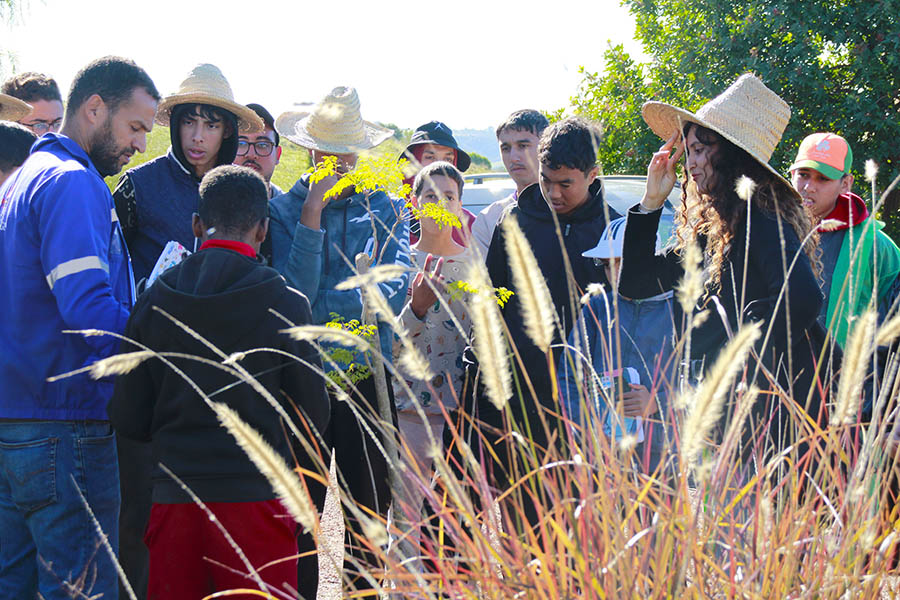
In societies marked by economic, social or environmental crises, one school stands out and has become a breeding ground for integrated public policies.
The Bouregreg Med-O-Med Gardening School, located in Rabat-Salé, perfectly embodies this role. It is not merely a vocational training centre or an educational garden: it is a place where politics is conducted differently, balancing the acclimatisation of plants with human dignity.
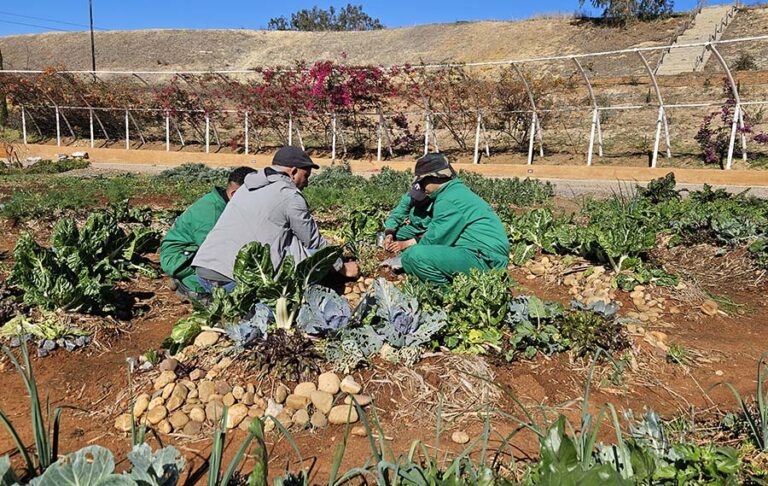
The school acts as a localised, inclusive and participatory environmental policy. Through learning about aromatic, organic or even horticultural gardening, it empowers groups who are often excluded (or even neglected) from decision-making processes: young people who have dropped out of school, people from marginalised neighbourhoods, recipients of RAMED (state aid for the most vulnerable), etc. It demonstrates that ecology can and must be accessible to all.
The school acts as a local, inclusive and participatory environmental policy.
This project is therefore in line with national sustainable development strategies (NSDS 2030), whilst addressing existing gaps on the ground: it fosters connections, creates jobs, promotes health and builds resilience.
The school thus offers an alternative approach to education policy – one that is less academic, more socially oriented and tailored to local needs.
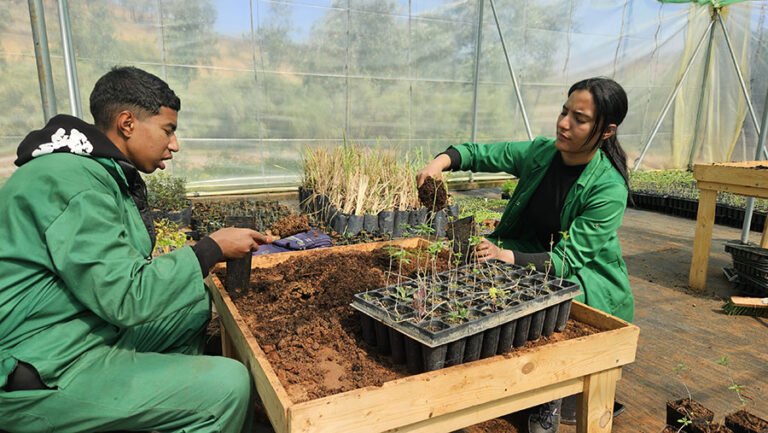
It develops practical skills (such as cultivating, preparing and sowing), as well as social skills (such as cooperating, sharing knowledge and caring for others). In this way, it aligns with the spirit of the National Strategy for Education and Training, emphasising education for all that is inclusive and tailored to the real needs of local communities and individuals.
Experimentation and connection with the living world
With its approach based on experimentation, the senses and a connection with the living world, the Bouregreg School paves the way for a pedagogy of reconnection: with oneself, with the earth, and with others. It offers a credible alternative to the logic of educational standardisation and a gateway to ecological citizenship – and much more besides!
The Bouregreg School paves the way for a pedagogy of reconnection: with oneself, with the earth, and with others.
The school not only trains gardeners, but also shapes the citizens of tomorrow, all whilst balancing manual labour with social recognition, combating the precarious nature of green-collar jobs and restoring the political value of working the land.
In this way, the school plays a part in the repoliticisation of work, in an area where traditional public policies struggle to make an impact.
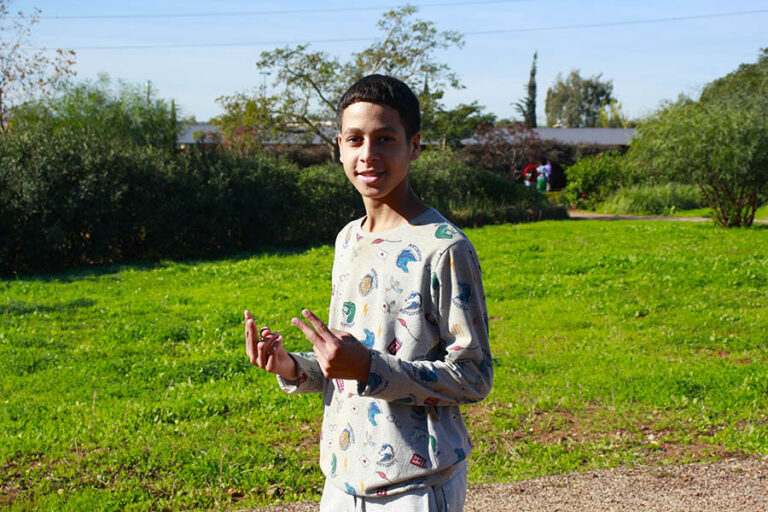
It reconnects work with social purpose, the local area and the environment. It creates fair work, work that cares, work that brings people together.
With the support of FUNCI (Islamic Culture Foundation in Spain) and as part of the Med-O-Med network, ‘Cultural Landscapes in the Mediterranean and the Middle East’, the school is not isolated. It is deeply rooted locally and connected globally (AAVB – INDH – MIEPEEC – AECID – Drosos Foundation – Fondazione FAI). This dual foundation is its strength: it promotes Mediterranean and Islamic horticultural heritage whilst addressing the specific socio-economic needs of the Moroccan region.
Schools play a part in the repoliticisation of work, in areas where traditional public policies struggle to make an impact.
In short, the Bouregreg Med-O-Med Gardening School is much more than a local project. It is a ‘concrete utopia’, to use Jean-Louis Laville’s phrase: an experimental public policy that brings together the goals of ecological transition, educational justice, decent work and social renewal.
Ana Da Silva
Cet article est disponible en français.
This post is available in: