


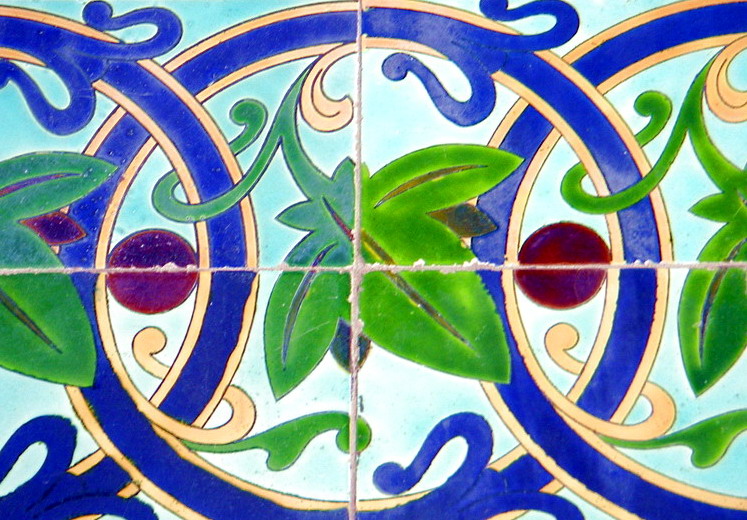
It is well-known that Seville in southern Spain is the universe of ceramic tiles. Back in the time of Al-Andalús, and specifically during the Almohad period, ceramics were frequently used as decoration in friezes and on facades. Many centuries later (the 19th), when monastic properties were confiscated by Spanish Prime Minister Mendizábal, an Englishman called Charles Pickman took up the opportunity to do business in Andalusia and, in 1841, set up a ceramics factory inside the Cartesian monastery of Santa Maria de las Cuevas. It still exists today.
Back in the time of Al-Andalús, and specifically during the Almohad period, ceramics were frequently used as decoration in friezes and on facades.
New working methods and concepts arose that were very different to the traditional kilns in Triana in Seville, and mechanical tools were devised such as ceramic printers and moulds.
Awards and medals
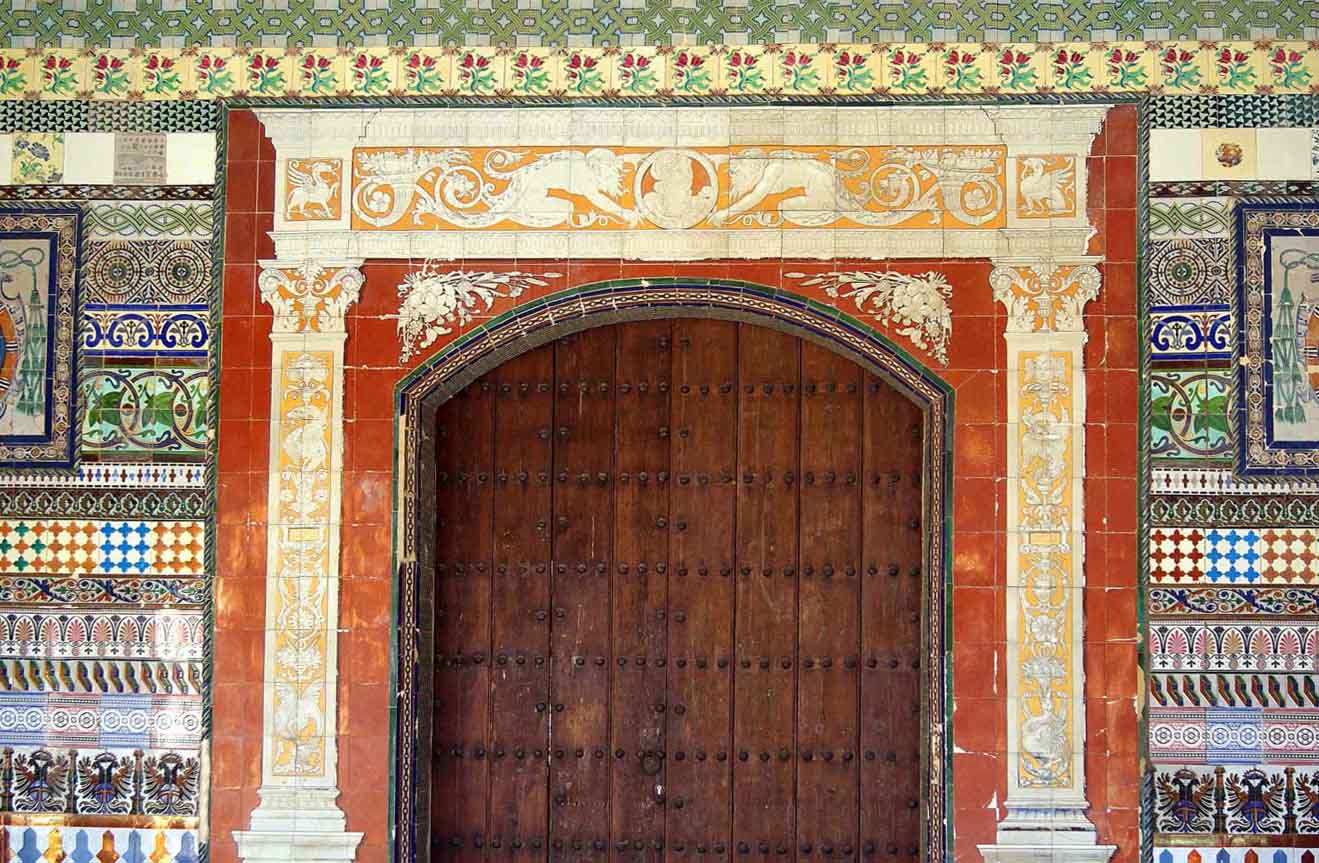 The second half of the 19th century brought huge success to Pickman, S.A., which received numerous awards and gold medals in international exhibitions: Paris (1856, 1867 and 1878), London (1862), Oporto (1865), Vienna (1872), Seville (1858, 1929 and 1949), Barcelona (1888), Bayonne (1864) and Philadelphia (1876).
Today, the entrance to this factory in Seville is decorated with a panel of varied ceramic tiles, ranging from Mudéjar-style interlaced motifs to floral and vegetal motifs along more Modernist lines.
This post is available in: English Español