


El Aljibe. RAJBEN. SPAIN
Country: Spain
- NAME El Aljibe Botanical Garden
- WEBSITE http://www.juntadeandalucia.es/medioambiente/servtc5/ventana/mos
- EMAIL jbotanico.aljibe.cma@juntadeandalucia.es
- PHONE (+34) 670 94 46 61
- OPENING HOURS From October 1st to May 31th: Tuesday to Sunday (10:00 a.m. to 2:00 p.m. and 3:00 p.m. to 5:00 p.m.).
From June 1st to September 30th: Tuesday to Sunday (9:00 a.m. to 3:00 p.m.).
Closed: Mondays except bank holiday and January 1 and 6, and December 25 and 26. - OWNERSHIP Public institution. Consejería de Medio Ambiente y Ordenación del Territorio (CMAOT).
- DIRECTOR Carmen Rodriguez Hiraldo
- FACILITIES –
- AREA (IN SQM) –
- NUMBER OF SPECIES 289
- CONSERVATION PROGRAMMES
1) Locating and monitoring of protected, threatened, endemic, and rare flora and fungi taxa present in Andalusia.
2) Collection of seeds and other propagules from the taxa under study, for the following purposes:
-
- Development of germination and establishment protocols.
- Representation in different botanical and mycological gardens.
- Conservation in the Andalusian Plant Germplasm Bank.
- Reintroduction or population reinforcement actions in the environment.
3) Representation of the vegetation, flora, and mycoflora that characterize the various biogeographical sectors of Andalusia.
4) Maintenance of conservation collections and genetic rescues.
5) Participation in the development of Planes de Recuperación aprobados por la Consejería de Medio Ambiente y Ordenación del Territorio de la Junta de Andalucía. From the Aljibe approved by the Consejería de Medio Ambiente y Ordenación del Territorio, such as: Pteridophytes, and Dunas and Arenales Costeros.
6) Collaboration in the Life Conhabit Project for the conservation and improvement of priority habitats on the Andalusian coast. LIFE13/ES/00586. This project aims to promote the improvement and conservation of the priority habitats of the Directiva Hábitat 92/43/EEC present in Lugares de Interés Comunitario (LIC) on the Andalusian coast, acting on the threats that affect them and, at the same time, contributing to the improvement of the species they harbor.
- RESEARCH PROGRAMMES
1) Collaboration with research centers, such as the CSIC, and universities, both regional and national, for the study of protected and endangered taxa present in the Andalusian community. The collections of botanical and mycological gardens are a tool for scientific research, as they provide genetic material from remote locations in the wild and bring together species in a single place for more effective research. Research centers such as the CSIC, other botanical gardens, private foundations, companies, and various universities rely on the equipment and resources offered by the Network to develop projects in different fields, including studies on pests, the effects of herbivory, trials with special substrates, and the monitoring of invasive alien species.
2) Collaboration with the Sociedad Española de Biología de la Conservación de Plantas (SEBICOP) on the SEFA Project (Seguimiento de Especies de Flora Amenazadas y de Protección Especial en España). It means studying the status of different species included in the annexes of the Directiva Hábitat, the Catálogo Español, or the LESPRE. The El Aljibe Botanical Garden participates in research on species such as Diplazium caudatum and Pteris imcompleta, among others.
3) We also collaborate by providing information for the Inventario Español del Patrimonio Natural y la Biodiversidad.
4) Permanent member of the Iberomacaronesian Association of Botanical Gardens.
- EDUCATION PROGRAMMES
1) The Aldea Program, a program developed in collaboration with the Regional Ministry of Education, whose objective is to promote the integrated development of educational initiatives for the conservation of natural resources and the promotion of sustainable development within the Andalusian educational community, with the aim of contributing to a more environmentally friendly, fair, and supportive society, enabling the achievement of a comprehensive education that shares and is based on the four educational pillars proposed by UNESCO: Learning to be / Learning to live together / Learning to know / Learning to do.
2) Training courses for professional sectors that require technical training in endangered and interesting flora.
3) Activities and workshops on different topics and at different levels aimed at all types of audiences as a way of introducing them to Andalusia’s floral values: workshops on photography, traditional uses of plants, knowledge of certain plant groups, etc.
4) Guided tours to learn about the contents of the different botanical gardens.
5) Permanent workshops with groups that can observe the dynamics of the gardens at different times of the year.
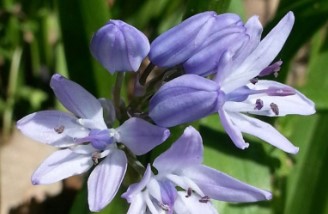
The El Aljibe Botanical Garden is located in the town of Alcalá de los Gazules in Cadiz, within the Alcornocales Natural Park, on the slopes of the Sierra del Aljibe, in the heart of the Bujeo region, an area characterized by unique humidity, soil, and flora conditions, fostered by frequent fog and acidic substrate, originating from the well-known “Areniscas del Aljibe” sandstones. This natural area was declared a protected area in 1989 and is also covered by other protection measures: Reserva de la Biosfera Intercontinental del Mediterráneo, Special Area of Conservation (SAC), and Special Protection Area for Birds (SPA Los Alcornocales). This botanical garden represents the flora and vegetation of the Aljíbico Sector, an area characterized by its soil (the Aljibe sandstones) and special climatic conditions, with abundant rainfall and fog and mild temperatures that allow for the development of lush vegetation. Cork oak and Portuguese oak forests, mainly, and the famous “canutos” (river and stream headwaters and valleys) constitute the last f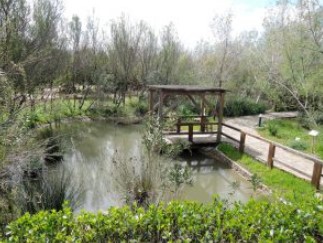 orest in southern Europe. Here, species typical of subtropical forests and other eras, such as some ferns, survive. El Aljibe is a magnificent place to enjoy these true gems, understand their value, and learn about the actions being taken to ensure their conservation.
Inside the garden, a pleasant trail winds its way through the different plant formations that grow in this area, following a downward slope: the famous canutos (river and stream headwaters), Portugese oak groves, cork oak groves, oak forests, cloud forests, wild olive groves, bujeos, lagoon edges, and herrizas or heaths… which grow in association with the different geological substrates present in this natural space.