


Botánic de Sóller Garden
- NAME Botánic de Sóller Garden
- WEBSITE www.mucbo.org
- EMAIL mvicens@mucbo.org
- PHONE (+34) 971 63 40 14
- OPENING HOURS Monday to Saturday from 10 a.m. to 6 p.m (closing at 5 p.m. from November to February).
Sunday from 10 a.m. to 2 p.m. - OWNERSHIP Fundation
- DIRECTOR Daniel Gallego Morales
- FACILITIES
- 1-hectare garden
- Greenhouse and shade house for production
- Laboratory
- Library
- Herbarium
- Germplasm bank
- AREA (IN SQM) 1 Ha
- NUMBER OF SPECIES 650 taxa of Balearic flora, 167 of flora from other Mediterranean islands and areas of influence, 174 taxa of Canarian flora, 218 taxa of medicinal flora, and 137 local varieties of fruit trees.
- CONSERVATION PROGRAMMES
- RESEARCH PROGRAMMES Conservation biology of Balearic flora
- EDUCATION PROGRAMMES
- There is an educational program aimed at schools that can be consulted on our website.
- Courses and workshops throughout the year: photography, painting, cooking, horticulture, gardening, etc.
- Programs for children during the Easter and Christmas vacation weeks.
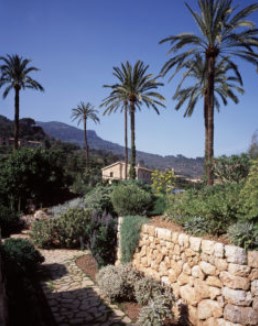
The first nucleus of the Jardí Botànic de Sóller was created in 1985 in response to the need to conserve the most endangered plant species, mainly due to the development of tourism since the 1970s and the change in land use throughout the Balearic Islands, especially on the coast, which endangered not only the most unique species but also their habitats.
It is a scientific, educational, cultural, and recreational institution, open to all citizens since 1992, and dedicated to serving society. Its main goals are the conservation of plant biodiversity, research in the field of conservation biology, and the dissemination, education, and awareness of plant wealth and its degree of threat, in order to contribute to its conservation.
It is a center for the study of plants in all their complexity and the properties that make them useful to humans. The well-documented collections of living plants are the main basis, and together with the Germplasm Bank and the herbarium, they make it possible to study their development and understand their biological requirements.
The JBS, covering approximately one hectare, is divided into two distinct sections: Wild Flora and Ethnobotany. The Wild Flora areas consist of collections of Balearic flora, Canarian flora, and flora from other Mediterranean islands. The Ethnobotany areas, plants related to humans, consist of collections of ornamental flora from the Mediterranean climate, medicinal and aromatic plants, and cultivars, varieties of fruit trees, and traditional vegetables from the Balearic Islands.
The JBS currently has more than 1,000 different wild species, making a total of around 5,650 plants. There is at least one different species per 10 m². There are 128 endemic species in the Balearic area, 110 in the Canary Islands, and around 200 more in the other Mediterranean islands. It is almost certainly the botanical garden with the most endemic species per m² in the world. In the cultivar areas, there are around 250 fruit trees with different traditional varieties, as well as seasonal vegetables.
It is a member of BGCI, the Ibero-Macaronesian Association of Botanical Gardens, and presents papers for the International Agenda for Conservation in Botanical Gardens
Enter street adress here. Or any other information you want.
This post is available in: