Umbría de la Virgen Garden, Spain
- NAME Umbría de la Virgen Garden
- WEBSITE http://www.juntadeandalucia.es/medioambiente/servtc5/ventana/mos
- EMAIL jbotanico.umbria.cmaot@juntadeandalucia.es
- PHONE (+34) 697 95 60 46
- OPENING HOURS
- October to April: Tuesday to Sunday (10:00 a.m. to 4:00 p.m.).
- May to September: Tuesday to Sunday (9:00 a.m. to 3:00 p.m.).
Closed: Mondays (except public holidays), January 1 and 6, December 24, 25, and 31.
- OWNERSHIP Public institution. Consejería de Medio Ambiente y Ordenación del Territorio (CMAOT).
- DIRECTOR Carmen Rodriguez Hiraldo
- FACILITIES The facilities associated with the garden are: a classroom/workshop, restrooms, gardening storage, shade house, laboratory, information point, exhibition area, and office. Both the built area and the 600 m² of garden area are adapted for people with physical disabilities. Pets are allowed if they are kept on a leash.
- AREA (IN SQM) –
- NUMBER OF SPECIES 503
- CONSERVATION PROGRAMMES
1) Locating and monitoring of protected, threatened, endemic, and rare flora and fungi taxa present in Andalusia.
2) Collection of seeds and other propagules from the taxa under study, for the following purposes:
-
- Development of germination and establishment protocols.
- Representation in different botanical and mycological gardens.
- Conservation in the Andalusian Plant Germplasm Bank.
- Reintroduction or population reinforcement actions in the environment.
3) Representation of the vegetation, flora, and mycoflora that characterize the various biogeographical sectors of Andalusia.
4) Maintenance of conservation collections and genetic rescues.
5) Participation in the development of Planes de Recuperación approved by the Consejería de Medio Ambiente y Ordenación del Territorio, in this case, two of the four plans currently approved: Pteridophytes and Dunas-Arenales.
- RESEARCH PROGRAMMES
1) Collaboration with research centers, such as the CSIC, and universities, both regional and national, for the study of protected and endangered taxa present in the Andalusian community. The collections of botanical and mycological gardens are a tool for scientific research, as they provide genetic material from remote locations in the wild and bring together species in a single place for more effective research. Research centers such as the CSIC, other botanical gardens, private foundations, companies, and various universities rely on the equipment and resources offered by the Network to develop projects in different areas, including studies on pests, the effects of herbivory, trials with special substrates, and the monitoring of invasive alien species.
2) Collaboration with the Sociedad Española de Biología de la Conservación de Plantas (SEBICOP) on the SEFA Project (Seguimiento de Especies de Flora Amenazadas y de Protección Especial en España). It means studying the status of different species included in the annexes of the Directiva Hábitat, the Catálogo Español, or the LESPRE.
3) Permanent member of the Iberomacaronesian Association of Botanical Gardens.
- EDUCATION PROGRAMMES
1) The Aldea Program, a program developed in collaboration with the Regional Ministry of Education, whose objective is to promote the integrated development of educational initiatives for the conservation of natural resources and the promotion of sustainable development within the Andalusian educational community, with the aim of contributing to a more environmentally friendly, fair, and supportive society, enabling the achievement of a comprehensive education that shares and is based on the four educational pillars proposed by UNESCO: Learning to be / Learning to live together / Learning to know / Learning to do.
2) Training courses for professional sectors that require technical training in endangered and interesting flora.
3) Activities and workshops on different topics and at different levels aimed at all types of audiences as a way of introducing them to Andalusia’s floral values: workshops on photography, traditional uses of plants, knowledge of certain plant groups, etc.
4) Guided tours to learn about the contents of the different botanical gardens.
5) Permanent workshops with groups that can observe the dynamics of the gardens at different times of the year.
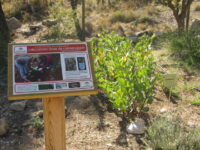
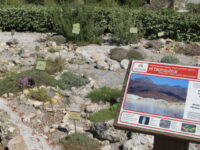
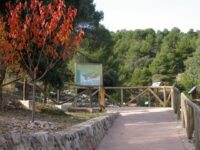 This garden has two distinct areas. First, visitors walk through the ex situ sector, a small area of approximately half a hectare where plants from the more continental biogeographical region of Andalusia are carefully tended. These are grouped into different formations, most of which are the main habitats with unique species of special botanical interest.
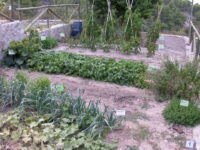
Examples include rock formations, aljezares (dry stone walls), blanquizares (white rock formations), and high mountain formations. Other areas, such as the vegetable garden and those dedicated to ornamental plants and ethnobotany, highlight the great benefits that plants provide to humans. The in situ sector covers an area of approximately 40 hectares and is home to a wide range of wild species that visitors can discover by walking along its short, medium, and long trails, which are 1, 2, and 4 km long, respectively. Each trail is circular but ranges from easy to difficult in terms of difficulty and altitude.
In an educational way, during your walk you will be able to interpret how the natural succession of plants occurs depending on factors such as temperature, altitude, and humidity. As you ascend, plant formations such as thyme and broom scrubs and escobonares are replaced by forests of pine and holm oak trees, as well as other species adapted to the harsh climatic conditions of the high peaks, such as piornales and lastonares.