


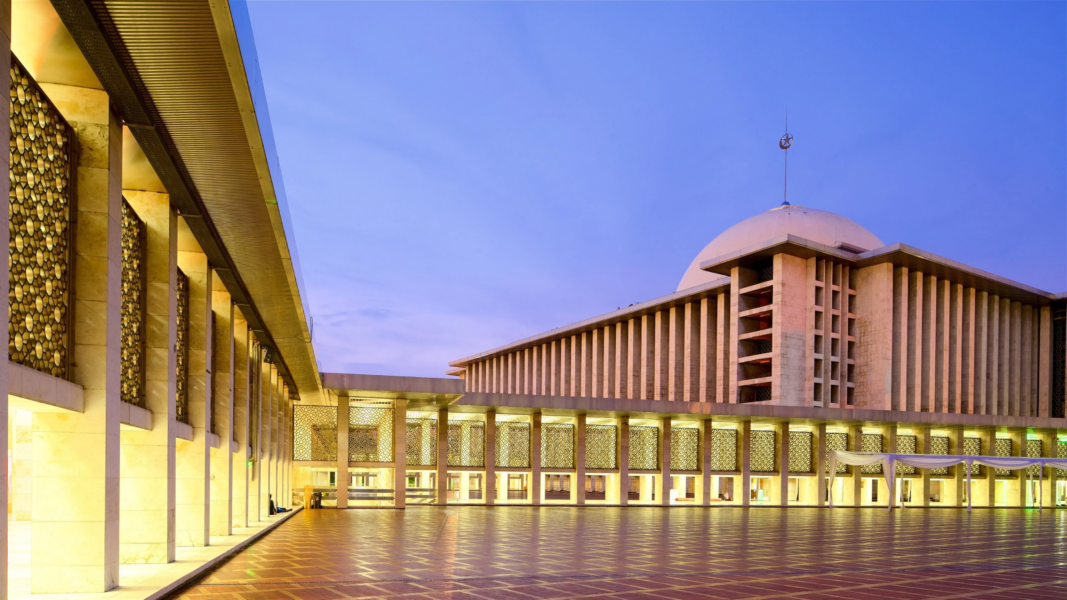
“Green Ramadan” initiatives in Indonesia and around the world promote a range of changes during the Muslim holy month, which includes fasting and festive, family-oriented activities during iftar, or the breaking of the fast.
The Istiqlal Mosque: a symbol of independence and sustainability
In the heart of Jakarta, Indonesia, the grand Istiqlal Mosque was built to stand for a thousand years. It was conceived by Sukarno, Indonesia’s founding father, and designed as a symbol of the country’s independence. Its seven doors —representing the seven heavens of Islam— welcome visitors from across the archipelago and the world, ushering them into the building’s majestic interior. But visitors here not only experience light; they also receive electricity.
During a major renovation in 2019, more than 500 solar panels were installed on the mosque’s vast roof, which has now become a source of clean electricity. Thus, during this month of Ramadan, the mosque has established an energy waqf —a type of charitable endowment specific to Islam that continues to bear fruit over time— to increase its capacity to generate renewable energy.
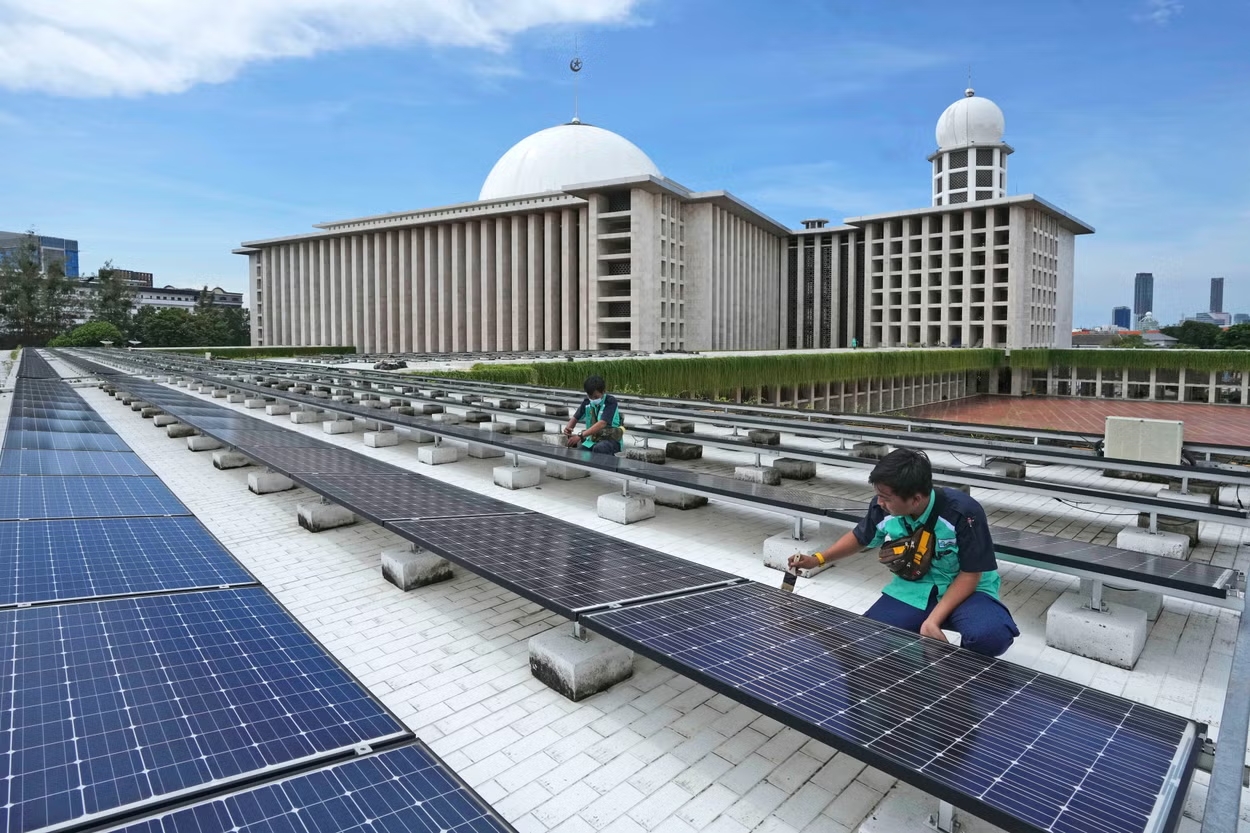
Her Pramtama, deputy head of the ri’ayah division —responsible for building management— at the Istiqlal Mosque, hoped that Islam’s most significant month, during which worshippers flock to mosques in greater numbers, would provide a boost to the Istiqlal solar project through donations.
Ramadan and caring for the environment
The mosque’s climate initiative is just one example of various ‘Green Ramadan’ initiatives in Indonesia and around the world, which promote a series of changes during the Muslim holy month, which includes fasting but also festive and family-oriented elements during the breaking of the fast.
In a month that emphasizes moderation and charity, recommendations may include using less water for ablutions before prayers, replacing plastic bottles and cutlery during communal iftar (the evening meal to break the fast) with reusable alternatives, and reducing food waste. Other suggestions include carpooling to mosques, using locally grown produce, prioritizing recycling, and using donations to fund clean energy projects.
Groups that take an Islam-based approach often highlight the environmental interpretation of certain verses of the Quran, as well as sayings and practices of the Prophet Muhammad regarding the earth, water, and against wastefulness.
For the world to limit the effects of climate change —which is already causing increasingly devastating droughts, floods and heatwaves — it is necessary to drastically reduce the use of harmful fossil fuels for electricity generation and transport, petrochemicals used to manufacture products such as plastics, and emissions from food waste in landfills, experts say. Although individual initiatives are only a small part of this transition, specialists say that the growing momentum behind climate goals may have some effect.
Groups adopting an Islam-based approach often highlight the environmental interpretation of certain verses of the Quran, and sayings and practices of the Prophet Muhammad concerning the earth, natural resources such as water, and against wastefulness.
Caring for the environment “is based on the premise that Islam has commanded us to be the stewards and protectors of this planet”.
Last year, at a meeting of the Muslim Congress for a Sustainable Indonesia, the country’s vice-president, Ma’ruf Amin, urged clerics and community leaders to “play an active role in raising awareness of issues relating to environmental damage”, and called for concrete action against climate change, including through donations to solar projects such as those at the Istiqlal Mosque.
Muhammad Ali Yusuf, a board member of the Institute for Disaster Management and Climate Change, part of Indonesia’s Nahdlatul Ulama Islamic organisation, said that raising awareness about clean energy is a “shared responsibility” for Muslims, with the installation of solar panels on mosques themselves serving as a catalyst for a wider transition.
In the United States and Canada, environmental groups that began to emerge within Muslim communities in the mid-2000s, independently of one another, developed “green Muslim interpretations” based on their religious traditions, according to Imam Saffet Catovic, an environmental activist within the US Muslim community. “In some cases, mosques were receptive to this,” he said. In others, their leaders “did not fully understand” the initiative, he added. Ramadan offers a “unique opportunity for environmental education within the Muslim community”, Catovic noted. “Thirty days allow someone to change their habits.”
The website of the Islamic Society of North America calls on Muslims to be “an eco-friendly community”, and states that caring for the environment “is based on the premise that Islam has commanded us to be the stewards and protectors of this planet”.
Some mosques and Muslims around the world are gradually heeding such calls.
Ramadan offers a “unique opportunity for ecological training within the Muslim community”.
Global projects and practical challenges
Before Ramadan this year, the mosque at the Al Ma’hadul Islamic boarding school in Indonesia received solar panels through Islamic donations, which provided enough energy to meet all the mosque’s needs. The electricity generated by the panels also lights up the surrounding schools and access routes.
The Nizamiye Mosque in Johannesburg, South Africa, with its towering minarets and spacious interior, has a roof dotted with domes and solar panels that help keep the lights on in the mosque, as well as in the surrounding schools, clinic and bazaar.
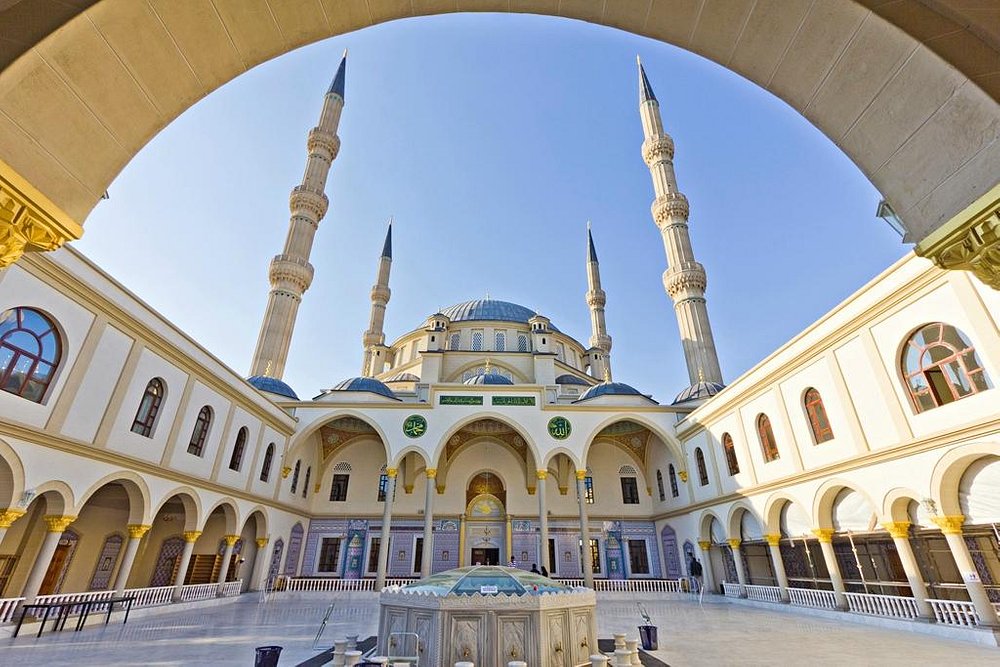
The 143 solar panels generate more than a third of the energy used at the complex in a country that has struggled in recent years to provide sufficient electricity through its overburdened grid.
In Edison, New Jersey, Masjid Al Wali, a mosque and community centre, has introduced changes such as selling reusable water bottles to its members at cost and installing more water dispensers to discourage the use of disposable plastic bottles, said board member Akil Mansuri: “Preserving the environment is the right thing to do from an Islamic perspective,” added Mansuri. “People accept the message, but its adoption is always slower.”
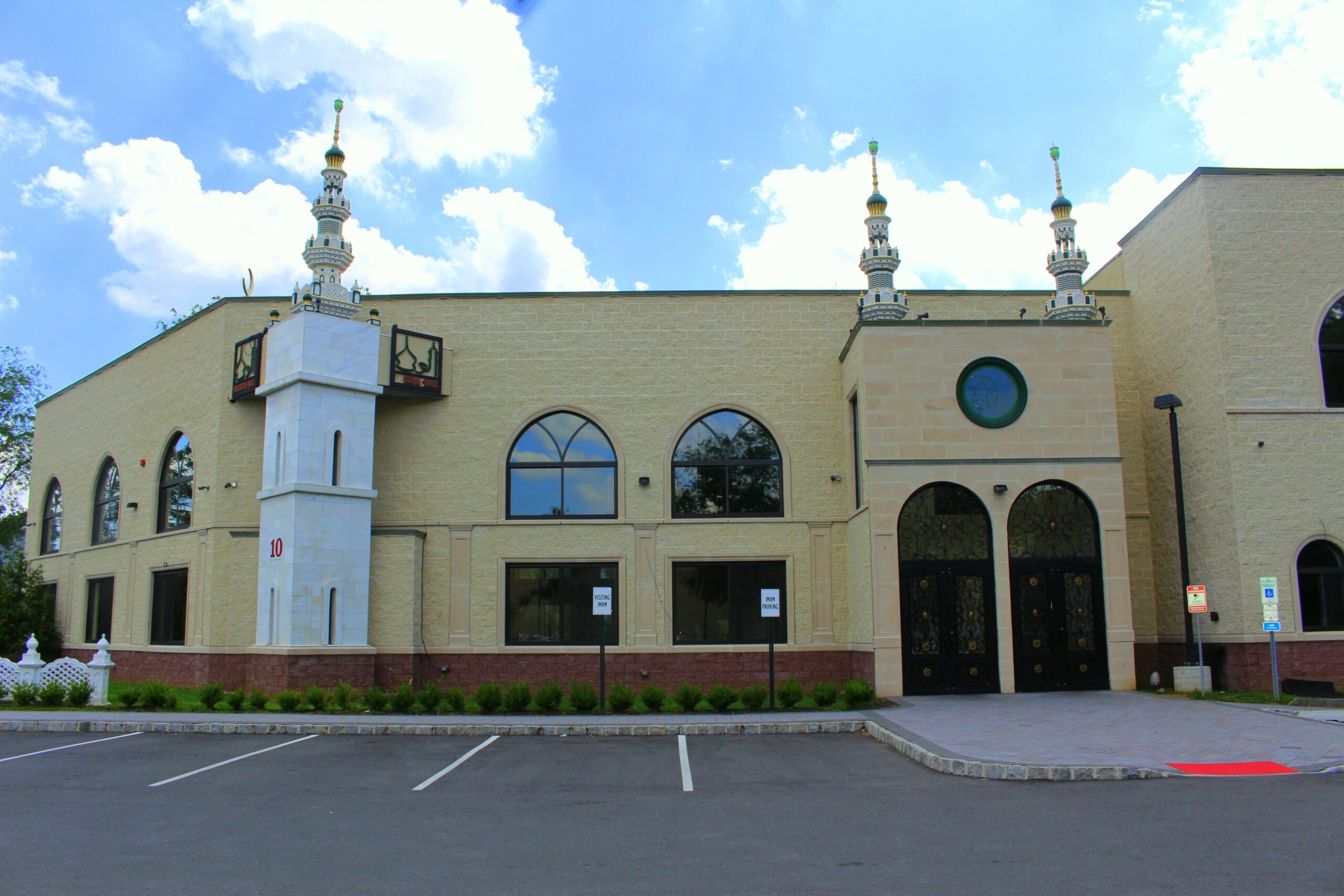
Several years ago, Masjid Al Wali, whose activities include an Islamic school and monthly community dinners, installed solar panels.
“I feel that, as a Muslim, mosques are the hub of communities and should take on a slightly greater leadership role in sustainability and recycling,” said Nasim Talukdar, the founder of PAP.
The food for the mosque community’s iftars during this past month of Ramadan was delivered in pre-packed plastic boxes, said Mansuri. However, the mosque’s leaders are encouraging members to take home leftovers and reuse the boxes, rather than throwing them away, he noted, adding that he hopes alternatives can be found for next Ramadan.
In Britain, Projects Against Plastic (PAP), a Bristol-based charity, is leading a plastic-free Ramadan campaign.
“I feel that, as a Muslim, mosques are the hub of communities and should take on a slightly greater leadership role in sustainability and recycling,” said Nasim Talukdar, the founder of PAP. “During the month of Ramadan, I have really seen an absurd amount of single-use plastic.”
Mosques are being urged to raise awareness of plastic pollution and reduce their reliance on single-use plastics. Seven mosques in Bristol took part in a pilot project last year with mixed results, and this year a nationwide campaign was launched, with more than 20 mosques taking part.
In addition to education, another challenge arises when mosques lack sufficient funds to purchase reusable cutlery, dishwashers and water dispensers.
“We knew we were going to hit some barriers and encounter some opposition, but, to be honest, the participation we’ve seen so far has been quite impressive,” said Talukdar. “Although progress is slow, there is a real appetite for this kind of initiative within the mosque.”
Ummah for Earth, an initiative led by an alliance aiming to empower Muslim communities facing climate change, is urging people to commit to adopting an eco-friendly practice during the month of Ramadan. Options include asking an imam to address environmental issues, donating to environmental organisations and shopping sustainably.
“Many Muslims are unaware that there are environmental teachings in the Quran and the Prophet’s sayings, and that they have an important role to play in protecting the planet,” said Nuhad Awwad, a Beirut-based activist and global outreach coordinator for the Ummah for Earth project at Greenpeace MENA (Greenpeace Middle East and North Africa).
Unfortunately, it must be said that, in their efforts to raise awareness, activists often encounter the argument that climate change is a matter of “fate” and that “one cannot change the fate determined by God”, explained Awwad.
Source: INDEPENDENT en español
Text: Edna Tarigan y Mariam Fam
Cover image: Mezquita Istiqlal ©Expedia
This post is available in: English Español